
The Fair Work Agency & Why Employers Need Good HR Systems Now
The UK employment law landscape is changing — and for employers, that means greater scrutiny, tighter compliance expectations, and a growing need for clear, accessible HR records.
With the introduction of the Fair Work Agency in April 2026 alongside updates under the Employment Rights Act 2025, businesses will need to ensure their workplace practices are not only compliant, but also properly documented and easy to evidence if challenged.
From April, several important changes came into effect, including:
The right to SSP from day 1 of sickness absence and the removal of the lower earnings limit for entitlement to SSP.
An increase in the maximum protective award for collective redundancies to 180 days’ gross pay
Sexual harassment becoming a ‘protected disclosure’ under whistleblowing legislation
Simplified processes for trade union recognition
A new requirement to retain annual leave records for six years
The creation of the Fair Work Agency, with powers to investigate employers and review records
Taken together, these developments signal a clear shift towards increased accountability for employers.
Why Record-Keeping Matters More Than Ever
For many businesses, HR administration and record management are often the most difficult areas to stay on top of — especially as teams grow and employment law becomes more complex.
Policies stored in different folders, missing signed documents, inconsistent holiday records, or difficulty retrieving historical information can quickly become a problem during an investigation, grievance, or tribunal claim.
The introduction of longer retention requirements and stronger enforcement powers means employers need systems that allow them to:
Store records securely and consistently
Retrieve information quickly when requested
Maintain accurate audit trails
Demonstrate compliance with employment legislation
Reduce the risk of human error or missing documentation
In practice, relying on spreadsheets, paper files, or disconnected systems is becoming increasingly difficult to manage effectively.
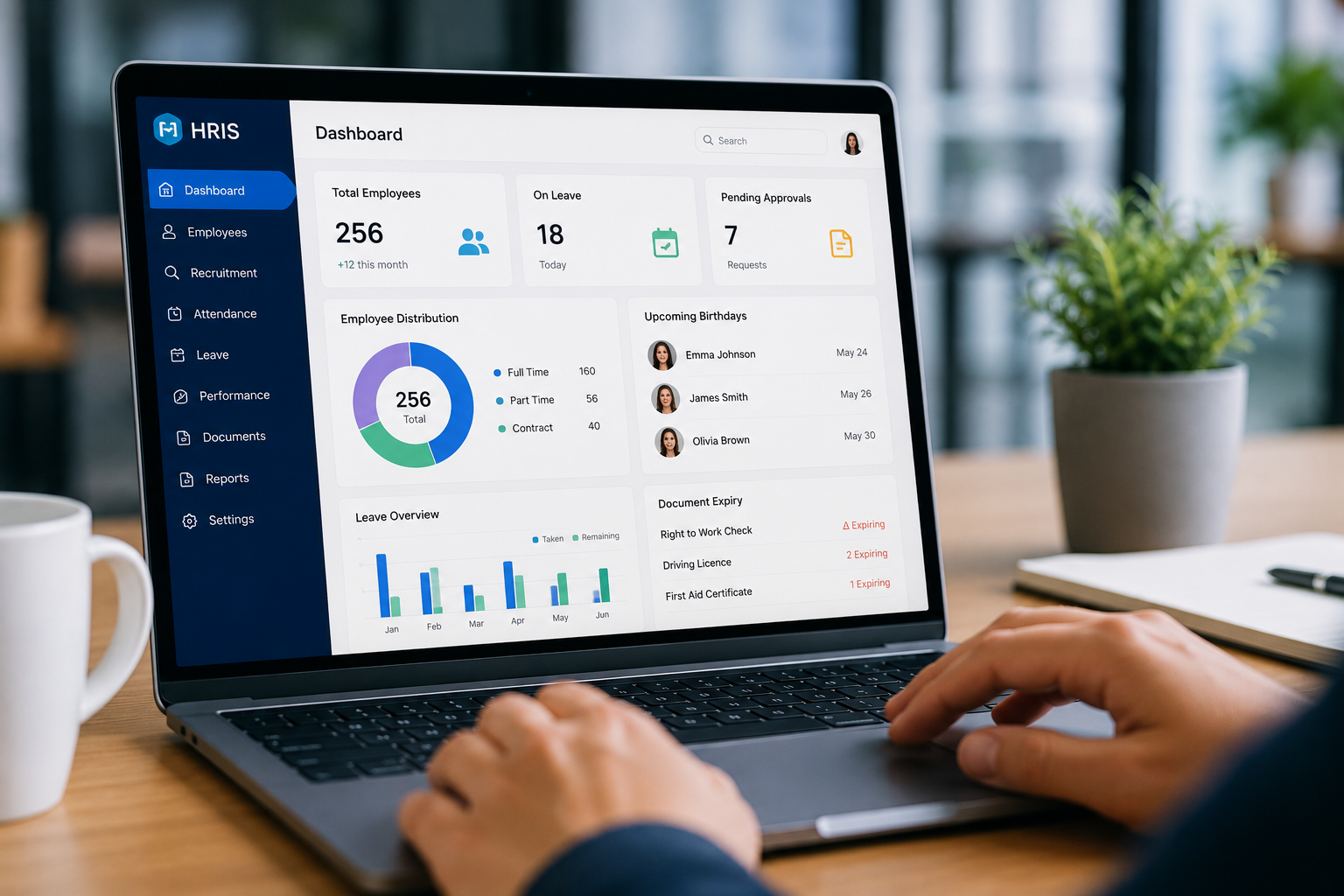
How an HRIS Helps Employers Stay Compliant
This is where a Human Resource Information System (HRIS) can make a significant difference.
An HRIS centralises employee information, automates routine processes, and creates a structured way to manage HR documentation and compliance responsibilities.
Rather than manually tracking records across multiple systems, you can keep everything in one secure, accessible platform.
Centralised Employee Records
An HRIS stores contracts, policies, right-to-work documents, disciplinary records, training records, and employee communications in one place.
This makes it far easier to demonstrate compliance if records are requested by the Fair Work Agency or during a legal dispute.
Instead of searching through emails or paper files, employers can quickly access accurate, up-to-date information.
Holiday & Absence Tracking
With annual leave records now needing to be retained for six years, accurate holiday tracking becomes increasingly important.
An HRIS automatically records:
Holiday entitlement
Leave taken
Remaining balances
Absence history
Approval records
This reduces administrative burden while ensuring long-term records are stored securely and consistently.
Audit Trails & Employee Acknowledgements
One of the biggest challenges employers face is proving that employees received policies, completed training, or acknowledged important updates.
An HRIS creates digital audit trails that show:
When documents were issued
When they were opened
Whether they were acknowledged
Any updates or amendments made
This level of visibility can be invaluable if concerns are raised around policies, procedures, or workplace conduct.
Reducing Risk While Saving Time
With the Fair Work Agency expected to have powers to review employer records and investigate workplace practices, businesses will need to be able to provide information quickly and confidently.
Many businesses find that implementing an HRIS improves efficiency across the organisation.
Automated workflows, digital document storage, employee self-service features, and streamlined reporting all help reduce manual administration and paperwork.
This not only lowers the risk of compliance issues but also frees up time for managers and HR teams to focus on supporting employees and running the business.
Now Is the Time to Review Your HR ProcessesWith further employment law reforms expected over the coming months, now is a good opportunity for employers to review how HR records are managed and whether existing systems are fit for purpose.
The businesses best prepared for these changes will be those with organised, accessible, and reliable HR processes already in place.
If you’d like to discuss how HR software can help simplify compliance, improve record-keeping, and support your business as legislation evolves, we’d be happy to help.
How we can help
Why not take a look at our HRIS? Click below for a demo and more information.